

The most advanced veterinary digital auscultation solution
Eko Vet+™ | CANINEBEAT® AI: Transforming everyday practice
What it does
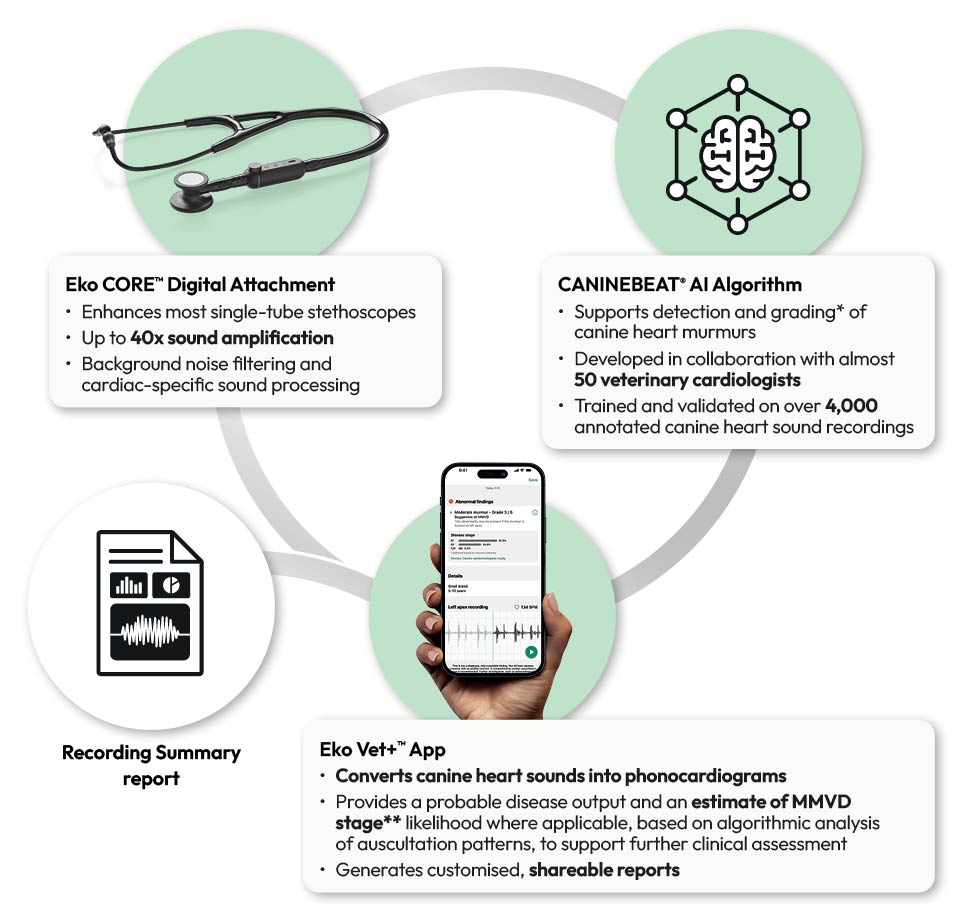
The three-part solution works with your current stethoscope and clinical routine, adding expert-validated AI support.
The benefits

Hear more.
CANINEBEAT® AI Algorithm
- Over 95% specificity and sensitivity in the detection of murmurs related to structural heart disease
- Grades* heart murmur intensity into soft, moderate or loud
- Delivers consistent, repeatable assessments, so the solution's support feels like an expert-validated second opinion
Eko CORE™ Digital Attachment
- Enables you to overcome clinic distractions, restless patients and hearing limitations
- Amplifies even subtle murmurs, boosting confidence in your detection ability

See more.
Eko Vet+™ App and shareable reports
- Makes invisible murmurs visible so you can have clearer, more confident owner conversations
- Helps build trust and compliance with owners
- Supports knowledge transfer between you and your colleagues Over 95% specificity

Do more.
Drives earlier action
- Can support earlier diagnosis and ongoing identification of changes in cardiac health for timely next steps
- Streamlines workflow, integrating seamlessly with existing equipment and routines
- Encourages proactive care and team-wide consistency, so everyone practices at their best
- Drives earlier action which may improve patient outcomes, giving more life to love

*CANINEBEAT® AI analyses heart sounds and classifies murmur loudness using a modified Levine intensity scale.
**These outputs are based on the algorithmic analysis of canine heart sound characteristics, including murmur intensity and punctum of maximal intensity (PMI) localization. In the prospective multicentre observational LISTEN study (50 centres; n=6,996), these auscultation characteristics were evaluated against echocardiographic diagnoses as the clinical reference standard and shown to be associated with cardiac diseases and MMVD stages.1 These findings form a key part of the scientific basis of the CANINEBEAT® AI algorithm embedded in the Eko Vet+™ App. Disease stage classifications are based on ACVIM guidelines.2 Definitive diagnosis and staging require confirmation by diagnostic imaging.
References: 1. The LISTEN Study. 2026. Publication in submission. 2. Keene BW, Atkins CE, Bonagura JD, et al. ACVIM consensus guidelines for the diagnosis and treatment of myxomatous mitral valve disease in dogs. J Vet Intern Med. 2019;33:1127–1140.